

Introduction
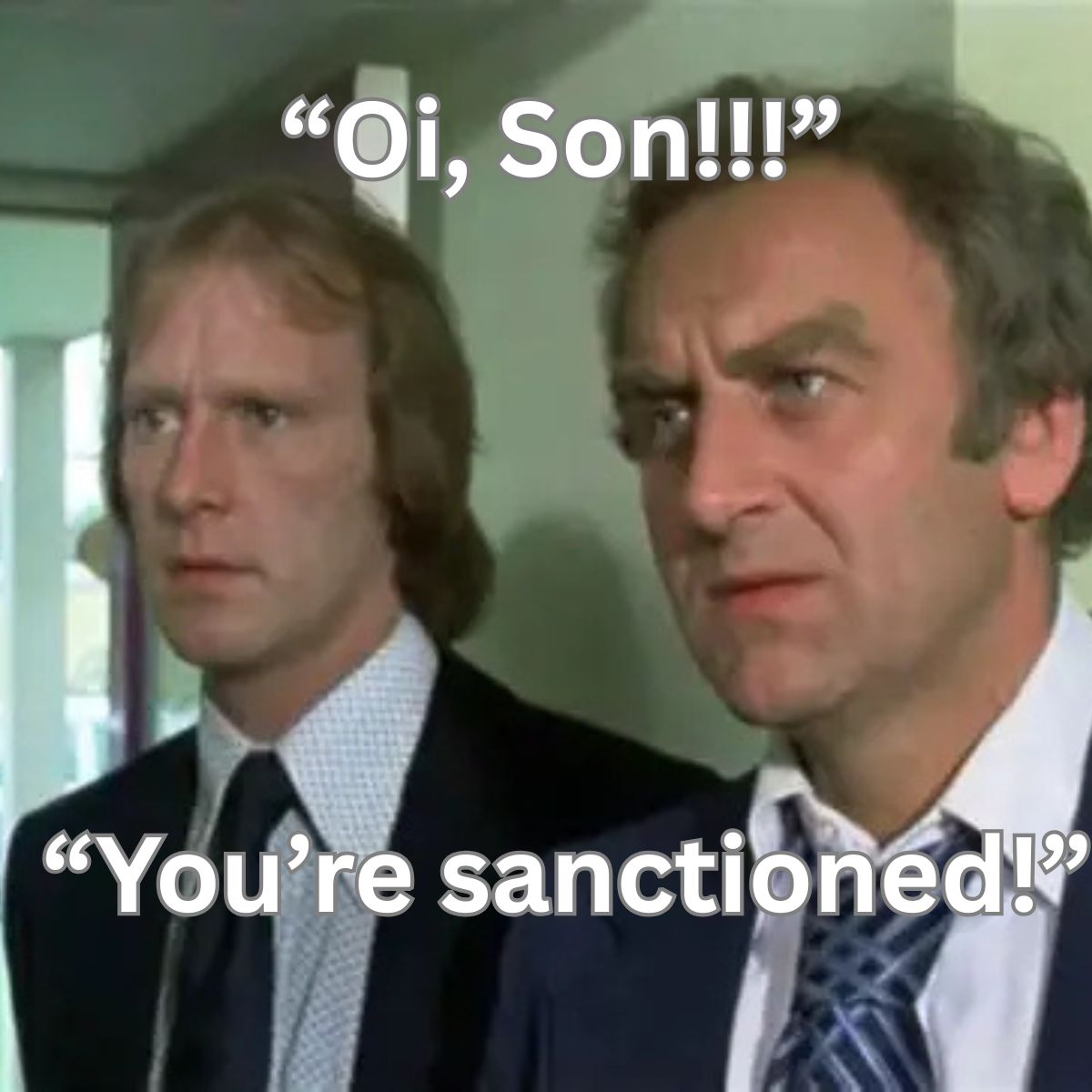
The Sweeney[1] is taken from the Sweeney Todd, which is cockney rhyming slang for the Flying Squad. The London criminal fraternity simply shortening it to The Sweeney.
It is perhaps a less well known fact[2] that tax dodgers also use The Sweeney as rhyming slang for “The FTT”. For example, “my accountant has appealed to the old Sweeney”
Well, The Sweeney, sorry, the FTT[3] has long had robust case-management powers, but Carbon Six Engineering Ltd v HMRC is a sharp reminder that the Tribunal will enforce compliance even where the defaulting party is HMRC.
In Carbon Six, HMRC was automatically barred for failing to comply with an Unless Order, the Tribunal refused HMRC’s application to set the bar aside, and then summarily allowed the taxpayer’s appeal.
What is an Unless Order?
An “Unless Order” is a direction/order that says:
Unless you do X by date Y, then a specified sanction will apply (often automatically).
In everyday litigation language, it is a “final warning” mechanism. The Tribunal gives a party a last opportunity to comply, but ties that opportunity to a defined consequence if they do not.
The FTT’s rule-based equivalent: Rule 8 “striking out / barring”
In the Tax Chamber, the procedural “teeth” of an Unless Order sit principally in Rule 8 of the Tribunal Procedure (First-tier Tribunal) (Tax Chamber) Rules 2009.
This includes:
- Automatic strike out for an appellant: proceedings “will automatically be struck out” if the appellant fails to comply with a direction that stated that failure “would lead to” strike out.
- Respondents (generally HMRC) are treated equivalently: Rule 8 applies to a respondent as it does to an appellant, except that “strike out” is read as barring the respondent from taking further part.
- Summary determination power: if the respondent is barred and the bar is not lifted, the Tribunal need not consider that respondent’s submissions and may summarily determine issues against them.
So, in tax appeals, an Unless Order commonly operates as the “Rule 8(1) trigger”. In other words, fail to comply by the deadline and the sanction happens automatically.
Automatic vs discretionary strike out/barring
Rule 8 draws a crucial distinction that practitioners should spot immediately:
“Will” (automatic) / Rule 8(1)
If the direction says failure would lead to strike out/barring, then the sanction is automatic.
This is the paradigm “Unless Order”.
“Could” (discretionary) / Rule 8(3)(a)
If the direction says failure could lead to strike out/barring, the Tribunal may strike out/barr but it is not automatic.
Natural justice protections for some discretionary gateways
Before striking out under Rule 8(3)(b) (failure to co-operate so the Tribunal cannot deal fairly and justly) or Rule 8(3)(c) (no reasonable prospect of success), the Tribunal must first give an opportunity to make representations.
That protection does not operate in the same way for Rule 8(1) automatic sanctions, because the party has already been warned in the direction itself.
How does an Unless Order fit within wider Tribunal case management?
Even outside Rule 8, the Tribunal has broad control of procedure:
- It may regulate its own procedure and give directions at any time (including amending, suspending or setting aside earlier directions);
- It may extend or shorten time for compliance with rules/directions (subject to not conflicting with statutory time limits);
- If a party fails to comply, the Tribunal may take “such action as it considers just”, including exercising Rule 8 powers or restricting participation.
In other words: an Unless Order is not an exotic remedy. It is part of the toolkit that may used to keep litigation moving.
The civil-courts backdrop: “relief from sanctions” thinking
Although tribunal procedure is its own system, the modern approach to procedural default has been heavily influenced by the civil courts’ “relief from sanctions” framework.
Civil Procedure Rule 3.9 directs a court, when considering relief from sanctions, to consider all the circumstances so as to deal justly, including (and giving weight to):
- efficient and proportionate litigation; and
- enforcing compliance with rules/orders.
The Court of Appeal’s structured approach in Denton (three stages: seriousness/significance; reasons; all the circumstances including particular weight to efficiency/compliance) is repeatedly treated as the organising framework for these applications.
Tribunal authorities then adapt that structured reasoning to the tribunal context.
The leading tax authority: BPP Holdings (Supreme Court)
The modern “North Star” for tax practitioners on barring/debarring orders is BPP Holdings Ltd v HMRC[4] in the Supreme Court.
Two points from BPP are especially practitioner-relevant:
“Windfall” arguments usually carry little weight
The Supreme Court recognised that debarring HMRC might improve the taxpayer’s prospects, but said that this point can be made in almost every debarring case.
Giving it weight (save perhaps exceptionally) would undermine the utility of the sanction.
Which, of course, makes sense.
Appellate courts should be slow to interfere with tough case-management calls
The Court accepted the decision was “tough” but emphasised that the decision is one for the tribunal, and an appeal court should only interfere where it is outside the generous ambit of discretion.
BPP is also important for explaining how Rule 8 operates across appellants and respondents, including the “strike out vs bar” equivalence.
The recent tax illustration: Carbon Six Engineering Ltd v HMRC (FTT, 2026)
What happened (procedurally)?
In Carbon Six[5], the Tribunal issued an Unless Order requiring HMRC to provide a fully reasoned response to the taxpayer’s applications by a specified deadline, with automatic barring if it did not.
It went a little something like this:
“Unless no later than 5pm on 14 August 2025 HMRC provides a fully reasoned response to each of the Appellant’s applications (and the allegations therein) … they shall be automatically barred from these proceedings.” (Unless Order)
The decision sets out the following timeline:
- the Unless Order required compliance by 5pm on 14 August 2025;
- by operation of the Unless Order, HMRC was barred as at 17:01 on 14 August 2025;
- formal notification of the barring order was later given (the judgment notes notification dated 18 September 2025;
- HMRC applied on 30 September 2025, within the time limit stated in the notification letter, to set the bar aside / seek relief (application for relief from sanctions).
The test applied to HMRC’s application
When it comes to weighing up such an application for relief from sanctions, one must apply the three stage test as set out in the UT in Martland v HMRC [2018] UKUT 178 (TCC)[6].
Although Martland was a late-appeal case, it explicitly connected tribunal discretion to the “relief from sanctions” stream and adopted the three-stage Denton approach as a useful structure.
The three stages are:
- Seriousness/significance of the breach
- Why the default occurred
- All the circumstances, giving particular weight to efficient litigation and enforcing compliance
These general factors are well rehearsed in Martland late-appeal type cases.
However, in Carbon, at stage 3, the Tribunal explicitly noted it was required to give particular/significant weight to compliance and efficient conduct in litigation.
A distinctive feature of Unless Orders is that the tribunal may treat the breach as inherently aggravated, because the Unless Order is typically a “second chance”. Chappell explains that to assess seriousness/significance you generally look at the underlying breach that led to the Unless Order, not the Unless Order in isolation.
That thinking is visible in Carbon Six, where the Tribunal evaluated HMRC’s default in context.
A notable practical detail was that the Tribunal recorded that HMRC advanced explanations about internal changes and administration, but no supporting witness evidence was produced for key factual assertions.
Summary determination against HMRC
After refusing relief and maintaining the bar, the Tribunal moved to Rule 8(8) consequences.
It cited Rule 8(8)’s power to ignore barred respondent submissions and to summarily determine issues against the barred respondent, then allowed the taxpayer’s appeal.
One reason given was that no statement of case had been served, and therefore there was no response to the taxpayer’s appeal position. In those circumstances, the Tribunal considered summary determination in the taxpayer’s favour consistent with the overriding objective.
Some key takeaways from Carbon Six
- Automatic sanctions are real: once the deadline passes under a Rule 8(1)-type direction, you are no longer “at risk”….you are sanctioned.
- Evidence matters: if you want relief, expect to prove the reason for default with evidence (typically a witness statement explaining what happened, what systems failed, and what has been fixed). The Tribunal in Carbon Six noted key assertions were unsupported by evidence.
- Rule 8(8) can be outcome-determinative: barring is not merely reputational or tactical; it can lead to a substantive win/loss via summary determination.
Final thoughts
The recent Carbon Six decision shows that the Tax Chamber is prepared to apply that principle even-handedly, including against HMRC, and to use Rule 8(8) to bring matters to a decisive conclusion.
So, don’t mess around with an Unless Order.
Because they’re the FTT, son…
… and they “haven’t had their dinner.”
Notes
[1] Yes, it’s another hot cultural reference from me.
[2] I use “fact” in the modern send. In other words, totally made up. Come on, I had to create some tenuous link so I could use the picture. This stuff isn’t easy you know!?
[3] First-tier Tribunal (Tax Chamber)
[4] https://supremecourt.uk/uploads/uksc_2016_0069_judgment_1895846dda.pdf
[5] https://caselaw.nationalarchives.gov.uk/ukftt/tc/2026/177?tribunal=ukftt%2Ftc&tribunal=ukut%2Ftcc
[6]https://assets.publishing.service.gov.uk/media/5b115855e5274a191271783e/William_Martland_v_HMRC_.pdf